Sales: 206.243.0700 Service: 206.243.0700 Parts: 206.243.0700
15025 1st Ave So, Burien, WA 98148

Tuesday, February 17, 2026

Toyota’s All-Electric Lineup Gains Rugged, Powerful New bZ Woodland SUV


  • Standard All-Wheel Drive with 375 Horsepower Combined System Output
  • 281 Mile of EPA-Estimated Driving Range Rating (260 miles for bZ Woodland Models Equipped with Optional All-Terrain Tire)
  • DC Fast-Charging Times Around 30 Minutes* (10-80% Charge Under Ideal Conditions)
  • Equipped with North American Charging System (NACS) Port for Wide Access to Thousands of DC Fast Charging Stations in the U.S.
  • Ample Utility with 74.3-Cubic Foot Rear Cargo Area with Seats Folded Flat, 8.4-inch Ground Clearance, Panoramic View Monitor with Multi-Terrain Monitor, and up to 3,500-lb Towing Capacity
  • Well-Equipped Interior with Standard SofTex®-Trimmed Seating, 14-inch Toyota Audio Multimedia Touchscreen, Dual Wireless Qi Device Charging, Ambient Lighting and More
  • bZ Woodland Premium Model Adds JBL® Premium Audio, Ventilated Front Seats with Memory Driver’s Seat, Panoramic Moonroof, Front Radiant Heaters, and More
  • Expected to Arrive in U.S. Toyota Dealerships in March 2026
  • Manufacturer’s Suggested Retail Price (MSRP) for the 2026 Toyota bZ Woodland Starts at $45,300 (Excluding Dealer Processing and Handling Fee)

Toyota’s most rugged addition to its battery-electric (BEV) lineup, the first-ever 2026 bZ Woodland is expected to arrive at dealerships nationwide next month. Equipped with standard all-wheel drive with X-MODE®, the bZ Woodland has a net combined system output of 375 horsepower and an EPA-estimated total driving range rating of up to 281 miles (the EPA-estimated driving range rating is 260 miles when equipped with optional All-Terrain tires). It also has midsize SUV utility, with the aforementioned all-terrain tire option, 8.4 inches of ground clearance, and up to 3,500-pound towing capacity.

The 2026 bZ Woodland brings a different twist to the existing bZ’s style. It adds rugged black overfenders to the Toyota hammerhead front end, has nearly 6-inches of additional length, and just under one inch of additional height in the rear. The extra length gives it a bit more space than its bZ sibling, with 74.3 cubic feet of storage with second row seats folded flat, versus the bZ model’s 67.1 cubic feet.

Its standard roof rails further set it apart from the bZ, providing added utility for accessories like luggage or bicycle racks. For the finishing touch, bZ Woodland’s 18-inch aluminum wheels with aero covers give it a modern-yet-rugged feel, and the available All Terrain tires are a great option for drivers that want to venture on the less beaten path.

With its standard 375-hp net combined system output, the dual-motor, all-wheel-drive (AWD) powertrain makes the bZ Woodland the most powerful bZ yet. Toyota estimates the bZ Woodland can accelerate from 0-60 mph in 4.4 seconds.

The bZ Woodland is the second BEV that will be joining the Toyota lineup, along with the refreshed bZ SUV and the all-new C-HR compact crossover. The total number of electrified models in the Toyota lineup, including BEV, Hybrid, Plug-in Hybrid, and Fuel Cell Electric Vehicle (California only) powertrains, is now 21 models.

*Estimate only. Actual range will vary depending on weather, driving style, and other factors.


Intuitive, Focused Driving with Adventurous Flair

The bZ Woodland comes equipped with All-wheel drive with electric motors housed in the front and rear eAxles. It comes standard with X-MODE ®, an AWD function that helps to optimize brake control and power delivery at the wheels for enhanced control and traction.

Another feature of the AWD X-MODE ® system is Grip Control. When activated and used at low speeds, the system modulates motor power delivery to enhance capability in adverse conditions. This feature was developed as an added function to react to road surface characteristics and maintain a constant speed to improve the driver’s ability to focus on what’s ahead.

Its AWD capability combines with the smooth, yet exhilarating, driving performance inherent in an all-electric vehicle. Its powerful drive is complemented by a low center of gravity, thanks to its battery pack placed flat under the floor. A battery cross-framing structure also adds to overall vehicle rigidity for stable handling.


Charging Up the Woodland

The 2026 Toyota bZ Woodland comes with a lithium-ion battery with a total capacity of 74.7 kWh and a North American Charging System (NACS) port compatible with Level 3 DC fast-charging. Under ideal conditions when using DC fast charging, the bZ is capable of charging from 10% to 80% battery capacity in around 30 minutes*.

The bZ Woodland is also equipped with a Battery Pre-conditioning feature. This system is designed to bring the battery to an optimal temperature for DC fast charging, which can enable faster charging. This function can be activated manually using system settings or automatically by setting the navigation system destination to a fast-charging station (with an active Drive Connect trial or subscription**).

The Toyota bZ Woodland also features Plug & Charge*** capability, an industry standard protocol that allows automatic identification, authentication and authorization at selected charging networks, reducing the need for multiple mobile charging applications.

For added charging flexibility, the 11-kW on-board charger enables Level 1 and Level 2 AC charging. It also comes standard with a dual-voltage 120V/240V home charger, making at-home Level 2 charging as easy as plugging into an applicable 240V outlet. The 2026 bZ Woodland has steering wheel-mounted paddle shifters to activate and adjust regenerative braking. These paddles turn the system on and dial the regenerative braking force up or down based on driver preference to capture energy during braking and transfer it to the battery.

*Estimate only. Actual range will vary depending on weather, driving style, and other factors.
**Battery Preconditioning automatic activation function requires an active Drive Connect trial or subscription. 3-year trial included. 4G network dependent.
***Plug & Charge requires an active Remote Connect trial or subscription. 3-year trial included. 4G network dependent.

Woodland Grades
Thanks to its BEV-dedicated e-TNGA platform, the bZ Woodland’s spacious cabin provides ample room for passengers, who can relax with abundant legroom for front and rear seats as well as ample side-to-side space in the rear. For entertainment and connectivity, a 14-inch touchscreen equipped with the Toyota Audio Multimedia system is standard.

The 2026 bZ Woodland is available in two, well-equipped grades: bZ Woodland and bZ Woodland Premium. The base grade bZ Woodland comes with plenty of comfort and convenience features, including heated seats front and outboard positions in the rear, a heated steering wheel, dual Qi-capable wireless device chargers, Digital Key* capability, dual-zone automatic climate control, and customizable ambient interior lighting.

The Premium model adds JBL® Premium Audio, front seat radiant heating, a fixed glass panoramic sunroof, a digital rearview mirror, ventilated front seats with driver’s seat and side view mirror memory.  All-Terrain tires are also available on both bZ Woodland trim levels.

Exterior paint options also capture its outdoor spirit, and will include the all-new Stepping Stone, along with Halo, Steel, Pavement, Raven Black, and Trueno Blue. Interior seating colors stay with the bZ Woodland’s outdoor motif and include Stone Brown and Black.

Key features by grade include:

bZ Woodland AWD

  • 375 net combined system horsepower
  • 281-mile EPA-estimated total driving range
  • Dual-motor all-wheel drive (AWD)
  • Standard 120V/240V dual-voltage charging cable
  • Standard J1772 and CCS1 charging adapters
  • 8.4 inches of ground clearance
  • X-MODE® with Grip Control
  • Roof rails
  • 18-in. wheels with black covers
  • Dual Qi-capable wireless device chargers
  • 14-in. Toyota Audio Multimedia touchscreen
  • Four USB-C ports (one front media, one front 15W, two rear 60W combined)
  • Heated, power-adjustable, and power-folding exterior mirrors
  • Dual-zone automatic climate control
  • 8-way power-adjustable front seats
  • SofTex-trimmed seats
  • Heated front seats and heated outboard rear seats
  • Heated steering wheel
  • Digital Key* capability
  • Smart Key System on all doors and rear liftgate
  • Available all-terrain tires (260-mile EPA-estimated total driving range rating with this option)

bZ Woodland Premium AWD (adds to or replaces bZ Woodland features with)

  • 375 net combined system horsepower
  • 281-mile EPA-estimated total driving range
  • Ventilated front seats
  • Front-seat radiant foot and leg heaters
  • Driver seat memory function
  • Auto tilt exterior mirrors with memory settings
  • Digital rearview mirror with HomeLink
  • JBL® 9-speaker audio system with subwoofer and amplifier
  • Panoramic fixed-glass roof with power sunshade
  • Available all-terrain tires (260-mile EPA-estimated total driving range rating with this option)


*Digital Key requires an active Remote Connect trial or subscription. 3-yeat trial included. 4G network dependent.

Intuitive Connected Tech
The Toyota bZ Woodland comes with a 14-inch touchscreen that runs the Toyota Audio Multimedia system, designed and engineered by Toyota’s Texas-based software teams.

bZ Woodland models are equipped with a six-speaker audio system for enjoying entertainment while on-the-go. For those looking for an enhanced audio experience, the bZ Woodland Premium model includes a JBL® Premium Audio system with nine speakers, including an eight-channel 800-watt amplifier and nine-inch subwoofer.

The Toyota Audio Multimedia system also allows for dual Bluetooth phone connectivity, with support for standard wireless Apple CarPlay® and Android Auto™ compatibility. With further connectivity, the bZ Woodland has a Wi-Fi Connect trial (30 days or up to 3GB after activation) that offers 4G connectivity for up to five devices – turning the bZ into an AT&T Hotspot.

Adding to the already robust offering of audio playback ability with HD Radio, USB data and a SiriusXM® 3-month trial subscription, Wi-Fi Connect* also enables the new Integrated Streaming feature, providing the ability to link separate Apple Music® and Amazon Music subscriptions to the vehicle for onboard control.

It also comes with a host of Toyota Connected Services** trials. An active Drive Connect** trial or subscription gives access to Intelligent Assistant, Cloud Navigation and Destination Assist. With Intelligent Assistant, simple phrases like “Hey Toyota” awakens the system for voice activated commands to search for directions, find Points of Interest (POI), adjust audio controls, change the cabin temperatures and more. Cloud Navigation, the available onboard navigation solution, utilizes the cloud to download the latest available map, traffic and routing information. To ensure users have the most up-to-date search capabilities, POI search is provided by Google Points-of-Interest data. Destination Assist also gives access to 24/7 live agent assistance to locate the next destination.

The bZ Woodland also comes with a five-year minimum trial subscription for Safety Connect*** and Service Connect***. Safety Connect includes an Emergency Assistance Button (SOS), 24/7 Enhanced Roadside Assistance, Automatic Collision Notification and Stolen Vehicle Locator. Service Connect gives drivers the capability to receive Vehicle Health Reports, Maintenance Alerts and reminders.

With the Toyota app, users can stay connected to their bZ Woodland with the Remote Connect** service, included as a three-year trial. With Remote Connect, users can activate headlights, a horn alert, buzzer and unlock the rear hatch. The remote climate features include the ability for in-cabin temperature controls, including remote activation of the available seat heaters/ventilators, steering wheel heater, defroster, and the ability to schedule a timer to activate in a daily routine.

All Toyota bZ Woodland models will also have access to the available Toyota Digital Key***, a feature of the Remote Connect service that enables a smartphone to be used instead of a physical key. Owners can also share vehicle access with ease, making it simple to lock, unlock and start the vehicle all through the Toyota App.

Remote charging capabilities are also included with Remote Connect trial or subscription on the bZ Woodland, which includes the ability to check charging status, start/stop charging with a vehicle that is already plugged in and even edit charging schedules, allowing for enhanced controls of the bZ Woodland’s charging. The Toyota App also provides an easy-to-use map to find charging station locations near you or along your route.

*4G network dependent.
**Connected Services trials begin on original purchase or lease date of new vehicle with the exception of Wi-Fi Connect, for which trial begins at time of activation. 4G network dependent. 3-year Drive Connect trial included.
***Digital Key, Safety Connect, and Service Connect requires an active Remote Connect trial or subscription. 4G network dependent.


Active Safety & Driver Assist Technology

The bZ Woodland features Toyota Safety Sense 3.0™, Toyota’s suite of active safety and driver assistance features that is designed to support driver awareness, decision making, and vehicle operation. This system uses a combination of millimeter wave radar and monocular camera to monitor various driving conditions. Please note that Toyota Safety Sense 3.0 systems are not a substitute for safe and attentive driving, you can find an online version of the Owner’s Manual here for instructions and limitations. The safety suite includes:

  • Pre-Collision System with Pedestrian Detection: Designed to help detect a vehicle, pedestrian, bicyclist, or motorcyclist and provide an audible/visual forward-collision warning under certain circumstances. If you don’t react, the system is designed to provide automatic emergency braking.
  • Full-Speed Range Dynamic Radar Cruise Control: An adaptive cruise control system that is designed to be set at speeds above 20 mph. DRCC uses vehicle-to-vehicle distance control to help maintain a preset distance from the vehicle ahead of you.
  • Lane Departure Alert with Steering Assist: Detects lane markings or the road’s edge at speeds above 30 mph. LDA w/SA is designed to provide an audible/visual warning if an inadvertent lane departure is detected. If no corrective action is taken, Steering Assist is designed to provide gentle corrective steering for lane-keeping assistance.
  • Lane Tracing Assist: Designed to help keep the vehicle in the center of a lane. LTA assists the driver with steering control while DRCC is in use.
  • Road Sign Assist: Uses the forward-facing camera to recognize specific road signs, such as speed limit, stop, and yield signs. RSA provides sign information to the driver via the Multi-Information Display.
  • Automatic High Beams: Designed to detect headlights of oncoming vehicles and taillights of preceding vehicles. AHB automatically toggles between high and low beams as appropriate.
  • Proactive Driving Assist: Uses the vehicle’s camera and radar, when system operating conditions are met, to provide gentle braking and/or steering to support driving tasks such as distance control between your vehicle and a preceding vehicle, pedestrian, or bicyclist. PDA can also provide gentle braking into curves.

For complete details on TSS 3.0, please visit Toyota.com/safety-sense.

Blind Spot Monitor with Rear Cross-Traffic Alert (BSM with RCTA) is also standard. The BSM system uses rear side radar sensors installed on the inner side of the rear bumper on the left and right side to assist the driver in confirming safety when changing lanes. The RCTA function uses the same sensors installed behind the rear bumper. This function is intended to assist the driver in checking areas that are not easily visible when backing up.

Whether you’re maneuvering into a tight parking space or over rough terrain, the standard Panoramic View Monitor with Multi-Terrain Monitor provides an enhanced view around the vehicle. Multiple angles around the vehicle can be selected to be displayed on the 14-inch multimedia screen.

Safe Exit Alert is also standard on bZ Woodland. This system is designed to detect vehicles or cyclists approaching from the rear and judges if there is a possibility of a collision with an opened door or passengers who are exiting. Safe Exit Alert will illuminate an indicator in the outer mirror and provide an audible alert to notify vehicle occupants.

The Toyota bZ Woodland is also equipped with Toyota’s Star Safety System, standard. This system includes Vehicle Stability Control (VSC), Traction Control (TRAC), Anti-lock Brake System (ABS), Electronic Brake-force Distribution (EBD), Brake Assist (BA) and Smart Stop Technology® (SST).

In terms of battery safety, Toyota uses many measures to help protect cell integrity, thanks to the design and a multiple monitoring system intended to protect the vehicle’s battery system. This includes:

  • Redundant monitoring of battery voltage, current and temperature designed to detect signs of abnormal heating to maintain optimal battery temperature and help prevent cell damage
  • Utilization of a high-resistance coolant circulation system is designed to help prevent a thermal event from short circuits even in high battery load conditions due to repeatedly switching between high-speed driving and rapid charging

Limited Warranty
Toyota’s 36-month/36,000-mile basic new-vehicle warranty applies to all components other than normal wear and maintenance items. Additional 60-month warranties cover the powertrain for 60,000 miles and corrosion with no mileage limitation. The Electric Vehicle Driving Components, including the traction battery, are covered for 8 years or 100,000 miles, whichever comes first. Toyota dealers have complete details on the limited warranty.

The Toyota bZ Woodland also comes with ToyotaCare, a plan covering normal factory-scheduled maintenance, for two years or 25,000 miles, whichever comes first, and three years of Roadside Assistance, regardless of mileage.

Wednesday, January 28, 2026

The Tacoma Makes History … Again!

 Toyota Tacoma Named Truck of Texas for the second year in a row at the Texas Auto Writers Association Annual Truck Rodeo


The fourth-generation Toyota Tacoma made history last year when it was the first midsize pickup truck to win the Texas Auto Writers Association (TAWA) Truck of Texas. It topped itself in 2026, becoming a back-to-back winner when awarded the title Truck of Texas by TAWA at its 32nd annual Texas Truck Rodeo event. This marks the fourth time in five years a Toyota pickup has taken the top award at the Truck Rodeo, with the full-size Toyota Tundra earning honors in 2022 and 2024.

“It’s great to see Tacoma win the Truck of Texas again for the second year in a row. It caps a great 2025 with its best-selling year ever, continuing a run as the most popular midsize pickup in the U.S. the last 21 years in a row,” said Brock Cartlidge, senior manager of Toyota Vehicle Marketing and Communities. “We appreciate TAWA’s members recognizing the Tacoma as the first Truck of Texas from a segment other than full-size pickup.”

The fourth-generation Tacoma debuted in the spring of 2023 with two new powertrains, including the i-FORCE MAX hybrid powertrain, with a total system output of up to 326 horsepower and a whopping 465 lb.-ft. of torque, a 75 percent increase in torque compared to the previous generation V-6 powered truck. Designed by Calty Design Research in California, engineered by TMNA R&D in Ann Arbor, and assembled for North America, Tacoma offers 11 unique grades to fit various lifestyles and customer needs. The Trailhunter grade builds upon Toyota’s legendary off-road and overlanding credibility with purpose-built engineering and robust components.

The Baja-inspired TRD Pro debuted the segment-first IsoDynamic Performance Seat for enhanced off-road driving control and comfort, while the Trailhunter grade is a factory-developed overlanding rig built from the ground up with the latest integrated off-road equipment from ARB, Old Man Emu, and RIGID.

TAWA’s annual Texas Truck Rodeo brings together journalists to evaluate automakers’ latest trucks and SUVs on an off-road course and a street drive. The fall event was held at Eagles Canyon Raceway in Decatur, Texas. Vehicles from the world’s top manufacturers were evaluated on interior, exterior, value, performance, and personal appeal.

“Earning Truck of Texas honors for the second consecutive year underscores how the Toyota Tacoma continues to set the benchmark for durability, capability, and real-world performance as judged by the Texas Auto Writers Association,” said TAWA President Cory Fourniquet.

TAWA is a Texas-based nonprofit association for automotive journalists promoting professionalism and quality in journalism for more than two decades. TAWA has grown to become one of the most influential and recognized automotive-journalist associates in the U.S. The group produces two annual events – Texas Auto Roundup and Texas Truck Rodeo – that allow members to experience vehicles from various manufacturers in one place, at one time.

For more information on the Toyota Tacoma, visit the Toyota Newsroom.

Monday, January 19, 2026

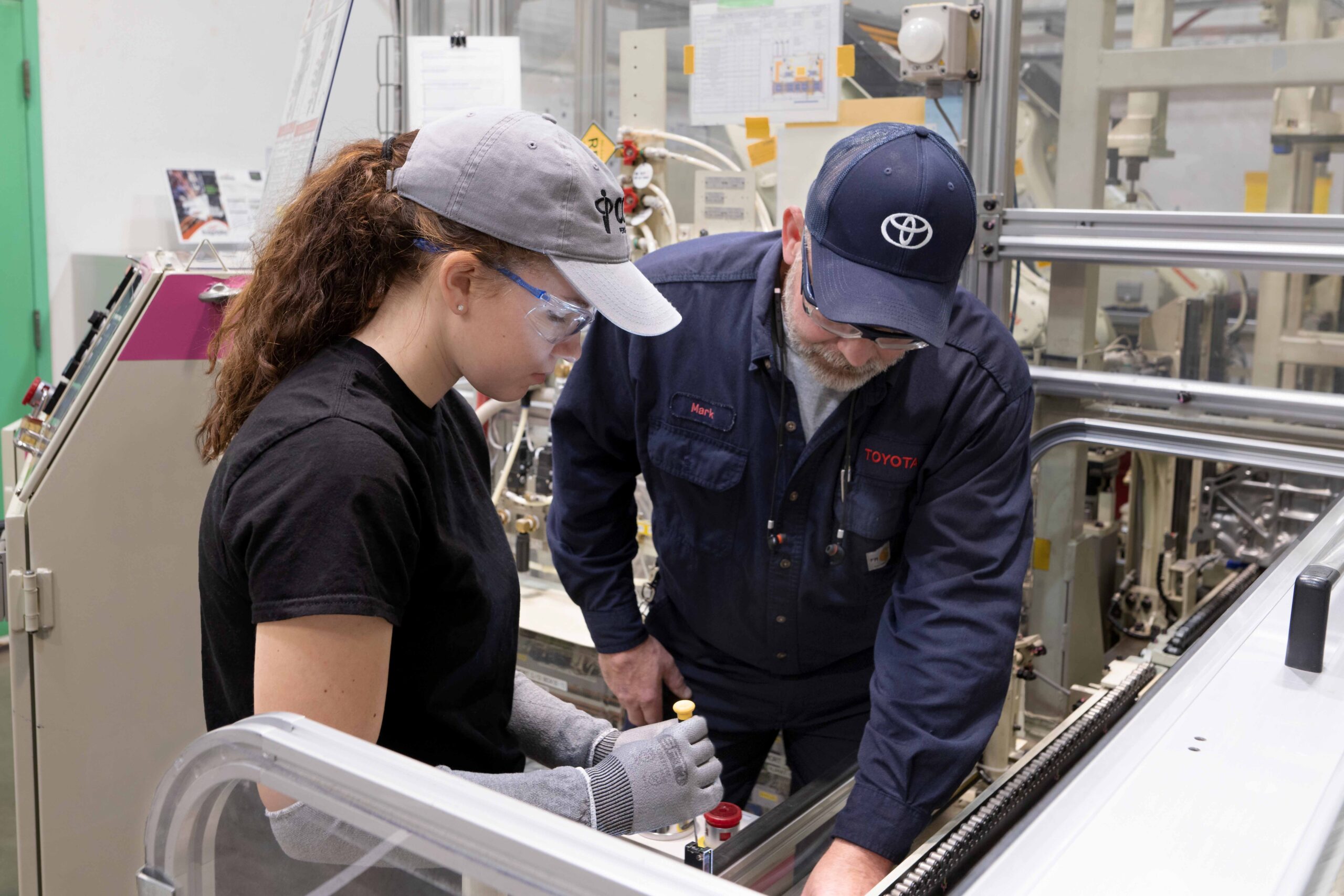
Creating Pathways to Skilled Trade Careers in Advanced Manufacturing


As technology continues to expand into every part of our lives, the advancements in manufacturing need both innovation and a skilled workforce to make it possible.

The manufacturing sector will need to fill 3.8 million skilled workers over the next decade, according to a Deloitte study commissioned by The Manufacturing Institute. Current U.S. community colleges and apprenticeship programs are only expected to meet about half the number of workers needed to fill those jobs. That leaves a gap of about 1.9 million skilled manufacturing employees.

Toyota is working to address this shortage through manufacturing-oriented programs that teach students about the possibilities of fun, interesting careers they might not have considered. These programs also provide practical skills that will provide participants with well-paid jobs with growth opportunities.

Growing FAME Advanced Manufacturing Technicians
In 2010, Toyota began a collaboration with the Bluegrass Community & Technical College, a school near the Toyota Motor Manufacturing plant in Georgetown, Ky. It has since expanded to a total of 10 Toyota manufacturing locations and a total of nearly 50 chapters nationwide.

This program became the Federation for Advanced Manufacturing Education (FAME). Students learn valuable skills from robotics to basic electricity, hydraulics, mechanics, and industrial troubleshooting. They also teach soft skills like teamwork, leadership, and time management.

“There’s an image that people have in their mind that manufacturing is dark, dirty, and dangerous, but it’s not,” said Stacy Droddy, talent acquisition analyst at Toyota West Virginia. “We try to share with our potential students that manufacturing is clean and safe. It’s highly technical. These aren’t just jobs. They are career pathways.”

Students receive paid training while attending school. Graduates earn associate degrees and can be certified as Advanced Manufacturing Technicians (AMTs). While they study, they work part-time in manufacturing facilities — being paid enough to cover tuition and living expenses.

When they graduate, their job is ready. About 85 percent of AMTs in the FAME program go on to work for their sponsoring employer. Graduates that are sponsored by Toyota have been working for the manufacturer for two years, and they already possess knowledge of Toyota’s systems and practices.  When they come in, they are ready to hit the floor running,” Droddy said.  “They don’t have to be taught about the equipment they’ll be working on.”


Graduate With No Debt and Skills to Excel
That’s how it worked out for Conner Bush. Bush, 20, started out with AMT at the recommendation of his father Mike, a longtime Toyota employee and manager at the Buffalo plant. Bush had a habit of fixing the family’s garbage disposal or lawn mower when he was growing up. His dad suggested Bush might as well get paid to do something similar at Toyota. The idea started to make more sense to Bush when he took pre-engineering classes at the college and wasn’t enjoying them.

Bush’s aptitude was refined in AMT training, which also included learning about Toyota culture. His days are filled with unique and interesting challenges. He uses cutting-edge software and diagnostic tools to understand why equipment, such as high-speed spindles (tools that bore holes into engine blocks) aren’t functioning properly.

“I have no debt whatsoever, and I’ve got a job that a lot of people my age would fight for,” Bush said. “I just wish more people would do it, because it’s a really good opportunity, especially for someone coming straight out of high school like I did.”

Series Note:
This article is part of a series of feature articles about the various workforce development programs across Toyota Motor North America. These programs span STEM education programs from Pre-K to 12, high-school and post-secondary industry programs, scholarships, internships and on-the-job training. To learn more about AMT, 4T Academy, T-TEN, Driving Possibilities, scholarship and internship programs, visit Community Engagement in the Toyota Newsroom.

Wednesday, December 31, 2025

Toyota’s Vehicle-to-Grid Program with Oncor Energy Demonstrates Benefits of Bidirectional BEV Charging


In conjunction with Texas-based Oncor, one of the nation’s largest utilities, Toyota has now introduced the next phase of its vehicle-to-grid (V2G) pilot. This program is designed to demonstrate real-world value by using bidirectional energy flow to enhance customer experience and create a more sustainable infrastructure that has the potential to lessen stress on the grid if scaled up.

“At Toyota, we are deeply committed to advancing technologies that enhance the everyday lives of our customers,” said Christopher Yang, senior vice president of Enterprise Strategy & Solutions at Toyota Motor North America (TMNA). “V2G technology represents a transformative step in delivering an exceptional home charging experience. It can enable drivers to reduce their electricity costs and help contribute toward a cleaner, more sustainable energy future.”

Yang continued: “For utilities, V2G can help smooth out spikes in demand and limit outages. It can help power homes when electricity is needed most and potentially serve as a virtual power plant, helping customers manage not only when they get their electricity, but from where.”

Toyota’s Japanese-specification bZ4X serves as the test vehicle for its V2G pilot program at TMNA HQ.

Kicked off in late 2022, the first phase of the pilot focused on leveraging testing vehicle and technology capabilities by integrating a Toyota bZ4X prototype vehicle and Oncor’s microgrid at its test facility in South Dallas to better understand the interconnectivity between BEVs and the grid.

This latest phase of the pilot is currently taking place at Toyota’s Plano HQ to study the following:

  • Enhancing Grid Stability: By enabling BEVs to supply power during peak demand periods, V2G can act like a network of “virtual” power plants, helping to stabilize the grid during extreme weather conditions.
  • Providing Backup Power: BEV batteries, such as the pack in the Toyota bZ, can provide backup electricity for homes during outages.
  • Offering Cost Savings: In regions with variable electricity pricing, customers can charge their vehicles during off-peak hours and use stored energy during peak times, potentially reducing overall electricity costs.
  • Improving Infrastructure Longevity: By easing strain on power lines and transformers, V2G can help extend the life of grid infrastructure and potentially reduce costs passed on to consumers.

Further, based on day-ahead market pricing, it may even be possible for customers to “sell back” energy to utilities, reducing monthly out-of-pocket costs.

How It Works
Wrapped in a distinctive blue “V2G” design, Toyota’s Japanese-spec bZ4X is connected to a Fermata Energy EV charger. This charger, managed by Fermata’s cloud-based V2G optimization platform, enables bidirectional energy flow by analyzing price signals and grid conditions to determine the optimal times to charge the vehicle and discharge stored energy back to the grid.

Currently, more than 4 million battery electric vehicles are on U.S. roads. If all were equipped with bidirectional charging, they could collectively contribute approximately 40,000 megawatts to the grid – a power output similar to that of 40 nuclear power reactors.


Toyota team members from Enterprise Strategy & Solutions celebrated the grand launch of the V2G pilot. L to R: Kellie Alexander, Anne Wu, Chris Yang, Maddy Strutner, Joy Baskin, Thibaut de Barros Conti, Martin Tran and Chris Moon.

Collaborative Pilots and Future Outlook
Toyota is actively testing V2G technology through pilot projects with other utilities including San Diego Gas & Electric and Pepco in Maryland. These pilots aim to help Toyota and the utilities understand diverse customer needs and infrastructure requirements across different markets.

“Integrating vehicles into the grid presents a huge opportunity to increase renewable penetration to the grid and make energy more affordable. Utilities are a key stakeholder in this transformation, and Toyota appreciates the learnings generated from these V2G pilots,” said Maddy Strutner, Manager of Grid Services at TMNA.


Representatives from Toyota, Oncor and Nuvve/Fermata celebrated the opening of Toyota’s V2G pilot TMNA HQ. L to R: Chris Yang, Geoff Bailey (Oncor), Ellen Buck (Oncor), Hamza Lemsaddek (Fermata) and Thibaut de Barros Conti.

Driving Innovation Forward
Toyota is working to develop the necessary technologies and business models to enable seamless V2G integration.

“This pilot is a critical step in exploring how connected vehicles can transform the broader energy ecosystem, delivering value to customers, the grid, and communities,” Yang said. “By enabling bidirectional charging, we’re exploring how we can help customers potentially save money while also reducing carbon emissions from the grid – a win-win for drivers and the environment.”

Thursday, December 25, 2025

Toyota Texas Earns 2025 Global Safety Excellence Award


 Toyota Motor Corporation announces its highest honors for global manufacturing safety

Following a competitive process across its footprint worldwide, Toyota Motor Corporation (TMC) named Toyota Texas as its Global Safety Excellence Award winner for 2025. The prestigious annual award is given to one Toyota vehicle manufacturing facility for overall safety focus and performance. Toyota Texas received the trophy for their innovative program that combined production shop-specific tactics with an employee-centered approach that resulted in a best-ever year for safety at the plant.

“This Global Safety Excellence Award is more than recognition; it’s proof of who we are at Toyota Texas,” said Frank Voss, plant president and Toyota Motor North America (TMNA) group vice president for truck manufacturing. “I’m so proud that in a demanding year, our team members showed that discipline and care go hand in hand, making our plant one of the safest in Toyota’s global network. Thank you, Team Texas, for showing the world the strength of our safety culture and that safety excellence is possible.”

In a multiple model change year with increased vehicle volume demands, the Toyota Texas safety team led the plant to focus on refining safety systems and management based on shop needs. Improved communication of safety key performance indicators (KPIs) also helped identify trends to be addressed, while keeping team members aware of safety performance and actions they could take to contribute. The effort resulted in gains with multiple safety KPIs, which caught TMC’s attention and landed the global prize.

“Thank you, Toyota Texas, for your continuous work and support to keep our safety culture at the forefront each day,” said Toyota Texas safety senior manager Rhonda Ebersole. “This achievement doesn’t happen by accident; it happens with our collective focus on and attention to safety to ensure everyone returns home to their families as healthy as they came in while delivering the best vehicles on the road today.”

Toyota Texas won top honors in a competitive evaluation against finalist plants from the automaker’s other regions across the globe. Joining Voss in a special trophy ceremony at the San Antonio plant was Mark Templin, executive vice president and chief operating officer, TMNA; Kevin Voelkel, senior vice president of manufacturing operations, TMNA; Carla Wright, Toyota Texas safety champion and vice president for manufacturing; among other plant leaders and safety team members.

“This milestone reflects our team members’ unwavering commitment, collaboration and dedication to creating a culture in which safety is not just a priority – it’s a shared value,” said Wright. “Our efforts have set a global benchmark, and this recognition belongs to each and every team member.”

With 3,700 Toyota Texas employees and an additional 5,600 supplier employees on campus, Toyota Texas is the exclusive global home to the Toyota Tundra and Sequoia. The new $531M rear axle plant announced in 2024 is set to begin production in fall of 2026.

Friday, December 19, 2025

2025 Toyota Year in Review: Celebrating Innovation that Drives Mobility and Electrification Forward


 From innovation and product launches to manufacturing announcements and sustainability initiatives, along with a commitment to its people, it was a standout year for Toyota. Here’s a look back at some of the company’s progress in 2025 and features that are sure to attract attention in 2026.

Electrified, Diversified and Beyond

One of Toyota’s highlights over the past year was the global reveal of the all-new 2026 Toyota RAV4. For more than three decades, the SUV has been a staple in the lineup. For model year 2026, the vehicle will hit dealerships with a new design, powertrain innovations, and software advancements, all while staying true to its versatile roots. The first-ever RAV4 GR SPORT, developed in partnership with Toyota’s GAZOO Racing Company, is exclusively available with a PHEV powertrain and carries forward Toyota’s vision of making ever-better vehicles through the rigors of motorsports.

The debuts didn’t stop there. The Toyota Battery Electric Vehicle (BEV) lineup expanded with the addition of the 2026 Toyota bZ2026 Toyota C-HR and 2026 Toyota bZ Woodland.

The bZ, formerly bZ4X, makes advancements in EPA-estimated driving range ratings, output, charging performance, and vehicle design. The C-HR boasts an impressive 338 horsepower combined system output, standard All-Wheel Drive and a dynamic, coupe-like design. While the 2026 bZ Woodland adds a different twist to its bZ sibling’s signature style, it takes the Toyota hammerhead front end with full-width LEDs and adds wide, black overfenders for a powerful stance complete with standard All-Wheel Drive.

What’s more, the BEV lineup also made some advancements, such as the addition of NACS chargers on the latest Toyota BEV models, expanding access to charging networks, and Toyota’s support of “EMPACT”, an EVgo project that is increasing the DC fast charging infrastructure in California.


Tech innovations were also abundant in 2025. For starters, Toyota set a new benchmark for in-car technology with the next-generation Toyota Audio Multimedia system. Making its debut in the all-new 2026 RAV4 and the all-new 2026 Lexus ES —  the system will later be introduced across additional Toyota models. With customer-focused upgrades and refined functionality, it reflects Toyota’s commitment to quality and continuous innovation.

Additional product announcements were showcased at this year’s SEMA Show, including the buzzworthy Scion 01 Concept. The past year also brought big news for GR Supra enthusiasts. The 2026 GR Supra MkV Final Edition is available for those who want to get their hands on the fifth-generation GR Supra.

Want to know the latest news for the 2026 model year? Stay in the know by visiting the What’s New for 2026 page. In the meantime, here are a few additional noteworthy vehicle stories mentioned in 2025:


Making Moves in Manufacturing

Manufacturing at Toyota reached new heights in 2025. One of the year’s biggest milestones was the start of production at the company’s all-new battery plant in Liberty, North Carolina. This highly anticipated facility marks Toyota’s eleventh U.S. plant — and its first and only battery plant outside of Japan. The nearly $14 billion investment is set to create up to 5,100 new American jobs.

On the heels of the battery plant start of assembly, Toyota announced another expansion to its U.S. manufacturing presence. To meet the growing demand for hybrid vehicles, the company is investing $912 million and adding 252 new jobs across its manufacturing plants in West Virginia, Kentucky, Mississippi, Tennessee and Missouri. The announcement is part of Toyota’s recent commitment to invest up to $10 billion in the U.S. over the next five years.

In August, it was announced that Toyota is taking bold steps to support working parents as the company adds four, all-new childcare centers across its manufacturing footprint. New centers will serve parents at Toyota North Carolina, Toyota Mississippi, Toyota Alabama and Toyota West Virginia, building upon two existing childcare facilities for Toyota’s Kentucky and Indiana plants.


In October, Toyota Kentucky announced $1.9 million in grants for nonprofit organizations across the region in 2025. The company’s annual community grants program reinforces Toyota’s longstanding commitment to education, workforce readiness and community resilience.

The Toyota Texas Experience Center renovation grand opening also took place this year, serving as an advanced manufacturing beacon in South Texas. Additionally, back in April, it was announced that Toyota West Virginia will invest $88 million to assemble the next generation of hybrid transaxles.

Also, several notable features were published in October to celebrate Manufacturing Month, including the video that highlighted all 14 manufacturing plants across North America, a piece on automation and innovation, and a write-up about the community-driven initiatives that took place this year.


Putting People First
Toyota is committed to supporting and empowering its team members. The talented workforce is what keeps the wheels turning at the company.

To honor the team members at Toyota, the company has published several features highlighting its employees’ professional journeys, passion projects and more. Here’s a look at some of the stories that put the spotlight on the company’s workforce throughout the year:

At Toyota, supporting its workforce and the communities where it operates remains a top priority for the company. One of the key initiatives helping to drive this effort is the Toyota USA Foundation’s Driving Possibilities initiative, which is a STEM-based education and community engagement program funded in part by Toyota Motor North America and Toyota Financial Services (TFS).

Over the calendar year, Driving Possibilities has announced two new locations for a total of 10 communities across North America. The Toyota USA Foundation grants support STEM education and additional services for students and teachers for $6.5 million in San Antonio, Texas. Grants were also announced to continue growth in Michigan ($3.9M), Alabama ($4.2M), and North Carolina ($2.7M).

Readers can learn more about the innovative and inspiring work underway in communities in Arizona, North Carolina, Georgia and Mississippi –  all sites that were announced last year.

Additionally, earlier this spring, Toyota’s Way Forward Fund announced more than $4 million in grants to help support access to care and injury support for children and families in Texas, California, Florida and Michigan.

To highlight Toyota’s community engagement efforts over the past year, here are a few links to features that showcase that commitment:


Creating a More Sustainable World
At Toyota, helping to protect and preserve the planet is important. The 2025 North American Environmental Sustainability Report highlights the company’s ongoing efforts to help create a positive global impact — including continued progress toward carbon neutrality.

In April, Toyota marked Earth Month by spotlighting stories that highlight how the company is working to make a positive impact on the planet, including On Our Way to 100% Renewable ElectricityTo Say Something About That – In Conversation with Kevin Butt, Former Group Manager of TMNA Environmental SustainabilityToyota’s Commitment to Enhancing Pollinator Habitat and Restoring Forests in the Monarch Butterfly Biosphere Reserve.

Additionally, there were several other events throughout the year that showcased more sustainable efforts. Here are a few to explore:


Driving the Next Breakthroughs Through Electrification and R&D
Toyota’s long-term strategy on the advancement of a hydrogen-powered society took center stage in 2025. For starters, the company announced the launch of a new commercially focused Toyota Hydrogen Solutions webpage as a business hub for those interested in Toyota’s hydrogen-related products, services and solutions. The site offers product information, provides case study examples, and offers contact information to help customers find products that guide them toward a pathway to help reduce their carbon emissions using Toyota’s proven hydrogen-powered fuel cell technologies.

In the fall, the company featured videos with four Toyota thought leaders who explained why, more than ever, hydrogen is a key part of Toyota’s multi-pathway strategy. It also featured a piece on what you should know about Toyota’s Hydrogen Headquarters (H2HQ) in Gardena, California, and the company’s fuel cell efforts.

Other noteworthy happenings included Toyota’s North American Hydrogen HQ opening its doors to the community. It was the first public event at the site in more than a decade. The immersive event showcased Toyota’s hydrogen-powered fuel cell technology with interactive demonstrations and STEM-related activities for guests, which included families, community leaders and members, partner organizations and team members.

In April, Toyota reaffirmed its commitment to a Hydrogen Society at the 2025 Advanced Clean Transportation Expo, introducing hydrogen-related plans and investments, and debuting new fuel cell technologies and products. Also, Toyota showcased its hydrogen commitment at ACT Expo a month later in May.

In terms of Research & Development (R&D), Toyota is continuously driving innovation forward. This year, the company produced a cool R&D sizzle reel that showcased a few highlights of how Toyota’s R&D engineers get to spend their time developing the future —and present —of mobility.

In July, Toyota announced an investment of more than $50 million in construction of new amenities for vehicle and automotive technology testing and development, affirming commitment to the Arizona Proving Grounds. Toyota celebrated completion of the development with local government officials during an event in December and showed off the new  5.5-mile oval track, off-road park, and new ride and handling surfaces, among many other improvements.

Safety is always a priority at Toyota. The company featured a three-part series including: The Origins of Toyota’s Life-Saving DesignsToyota Safety Sense for All and The Future of Safety. Additionally, Toyota featured some of the work Toyota’s Collaborative Safety Research Center (CSRC), whose mission is to advance mobility safety for industry and society. Here are a few links to feature stories and announcements that showcase this important research:


Building Momentum in Motorsports

Toyota’s motorsports program packed the year with high-speed action, strategy and unforgettable moments on tracks around the world. Drivers delivered standout performances, engineering teams kept pushing the limits, and fans enjoyed plenty of excitement. Altogether, it was a thrilling year that showcased Toyota’s passion for racing and set the stage for projects ahead.

For starters, Toyota announced its all-new motorsports advertising campaign, “Up to Speed,” which invited fans to go beyond watching from the sidelines and become part of the action. The campaign fosters a connection to the sport and its fans across nine high-energy spots that debuted in conjunction with Daytona 500 and ran throughout the motorsports season.

And what a season it turned out to be. Toyota won its 14th NASCAR® CRAFTSMAN Truck Series (NCTS) Manufacturers’ Championship in October. This is the third time in the last five seasons Toyota has captured the coveted title. And this 14th overall title extends Toyota’s advantage in Truck Series history.

That same month, Toyota claimed its 10th Formula Drift Auto Cup Title.

The winning streak continued with Corey Heim winning the 2025 NASCAR® CRAFTSMAN Truck Series (NCTS) championship after winning the season finale at Phoenix Raceway. This is the first championship in the Toyota Development Driver’s young career and marks Toyota’s 10th driver’s title in the Truck Series.

Toyota continued to heat up the track with Joe Gibbs Racing winning the 2025 NASCAR Xfinity Series Owner Championship in November.

Earlier this year, the company also produced a video featuring a behind-the-scenes look inside Toyota Gazoo Racing’s rutting-edge training facility in Mooresville, North Carolina. While motorsports play a major role in Toyota’s sports initiatives, it isn’t the only one.

Toyota is in the middle of its third season as the official automotive partner of the NFL and launched its most ambitious commitment yet to deliver unrivaled fan excitement, community impact and unforgettable cultural moments from pre-season fantasy drafts through Super Bowl LX.

This year, the company profiled 11 motorsports drivers who shared their personal stories about their professional journeys and more. Take a look at some of these passionate racers who are ready to take home a win for the team.

© 2012-2018 Burien Toyota
15025 1st Avenue South, Burien, WA 98148